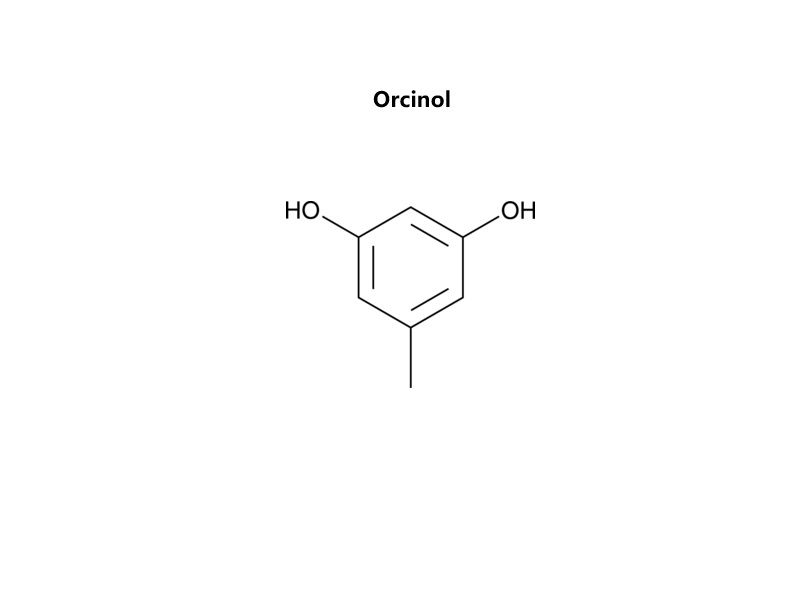
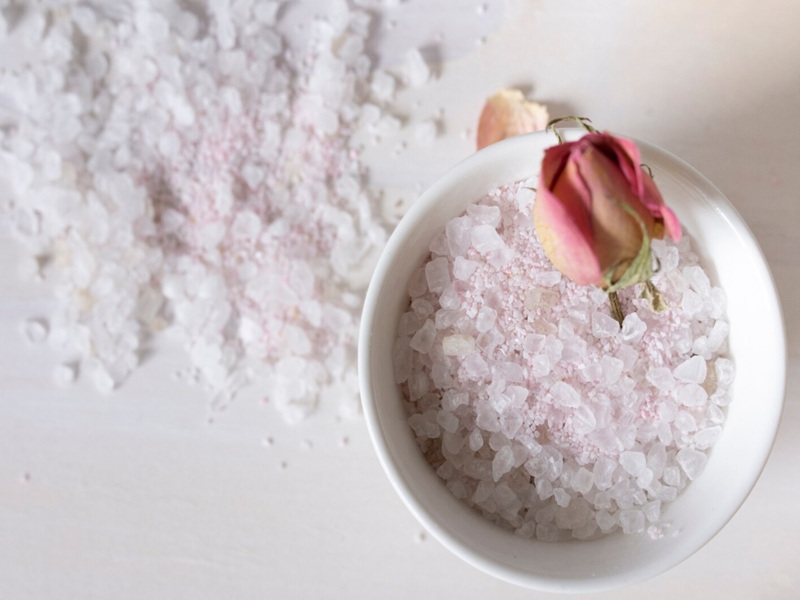
Orcinol CAS 504-15-4 é um composto orgânico natural classificado como um derivado de di-hidroxi toluenoÉ um composto fenólico constituído por um anel benzênico substituído com dois grupos hidroxila (-OH) nas posições meta (1 e 3) e um grupo metil (-CH₃) na posição 5. É um metabólito comum encontrado em diversos líquens e fungos, servindo como um bloco de construção versátil em síntese orgânica.
Nome :
OrcinolNº CAS. :
504-15-4MF :
C₇H₈O₂MW :
124.14Pureza :
99%Aparência :
White to pale pink crystalline solid.Condição de armazenamento :
Store in a tightly closed container, in a cool, dry, and dark place.Propriedades Químicas
Número CAS: 504-15-4
Fórmula molecular:C₇H₈O₂
Peso molecular: 124,14 g/mol
Fórmula estrutural: 5-Metilbenzeno-1,3-diol
Nome IUPAC: 5-Metilbenzeno-1,3-diol
Nomes comuns: Orcinol; Orcina; 3,5-Diidroxitolueno
Aparência: Sólido cristalino branco a rosa pálido.
Ponto de fusão: 107 - 110 °C
Ponto de ebulição: Decompõe-se ao ferver à pressão atmosférica.
Solubilidade: Moderadamente solúvel em água (mais solúvel em água quente). Livremente solúvel em etanol, éter, piridina e outros solventes orgânicos polares. Também solúvel em álcalis, formando sais de fenolato solúveis em água.
Estabilidade: Estável em condições normais, mas pode sofrer descoloração após exposição prolongada ao ar e à luz devido à oxidação. É sensível a agentes oxidantes fortes.
Odor: Aroma característico, doce e terroso.
Comportamento químico: Apresenta propriedades fenólicas típicas: fracamente ácido (pode formar sais com bases), sofre substituição aromática eletrofílica (ex.: halogenação, nitração) facilmente devido aos grupos hidroxila ativadores.
Atividades Biológicas
Função natural: Na natureza, o orcinol e seus derivados (por exemplo, ácido orselínico, ácido lecanórico) são metabólitos secundários produzidos por líquens e alguns fungos. Acredita-se que desempenhem funções na defesa contra microrganismos, herbívoros e radiação UV.
Atividade antimicrobiana: Demonstra propriedades antibacterianas e antifúngicas moderadas, contribuindo para a vantagem ecológica dos líquenes que o produzem.
Inibição Enzimática: Pode atuar como um inibidor fraco para certas enzimas, como a tirosinase e a polifenol oxidase, devido à sua semelhança estrutural com as moléculas do substrato.
Perfil de toxicidade: Geralmente considerada de baixa toxicidade aguda, mas pode ser Irritante para a pele, olhos e mucosas.Pode causar sensibilização após exposição prolongada ou repetida.
Biossíntese
Biossíntese Natural: Em líquens e fungos, o orcinol é biossintetizado através de via dos policetídeosO esqueleto central é montado pela condensação sequencial de unidades de acetil-CoA e malonil-CoA por uma poliquetídeo sintase (PKS), seguida por ciclização e modificação (redução, descarboxilação). O ácido orselínico é um precursor direto comum, que sofre descarboxilação para formar orcinol.
Síntese industrial/laboratorial:
1. Síntese Clássica: Envolve a fusão de dicetenoou outros derivados de acetoacetato com resorcinol na presença de um agente condensante como o cloreto de zinco.
2. A partir de derivados de tolueno: Pode ser sintetizado através da diazotação e hidrólise da 3,5-diaminotolueno ou através da desmetilação seletiva de derivados metoxilados mais complexos.
3. Métodos modernos: Pode envolver a hidroxilação catalítica do m-cresol ou outras técnicas de funcionalização regiosseletiva.
Aplicações

Destaques
Principais vantagens e benefícios
Funcionalidade dupla a partir de uma única fonte econômica: Orcinol oferece ambos fração di-hidroxi (resorcinol) fortemente doadora de elétronse um modificávelgrupo metil no mesmo anel aromático. Isso permite a derivação sequencial ou simultânea (por exemplo, oxidação do metil a um ácido carboxílico, substituição no anel) a partir de um único material de partida de baixo custo, possibilitando a síntese eficiente de moléculas complexas.
Origem natural com versatilidade sintética: Como um(a)composto de ocorrência natural(Encontrado em líquens e certas plantas), é visto de forma favorável em produtos de consumo (por exemplo, tinturas de cabelo rotuladas como "origem natural"). Sinteticamente, é produzido em larga escala, garantindo pureza consistente, amplo fornecimento e baixo custo, fazendo a ponte entre os mundos natural e sintético de forma eficaz.
Estabilidade e desempenho superiores em aplicações essenciais: Em comparação com seu parente resorcinol, o grupo metil no orcinol aumenta a lipofilicidade e estabilidadeEm formulações de tinturas para cabelo, isso se traduz em melhor penetração e cor mais duradoura. Em química analítica (por exemplo, o teste de Bial para pentoses), a reatividade específica do orcinol proporciona um complexo colorido mais estável.
Uma estrutura privilegiada para moléculas bioativas: A estrutura de orcinol é fundamental em muitas substâncias. compostos relevantes para a indústria farmacêutica, incluindo certos antibióticos, antioxidantes e inibidores de enzimas. Sua estrutura serve como um ponto de partida ideal para a química medicinal, permitindo a fácil geração de diversas bibliotecas para a descoberta de fármacos.
? Cenários de aplicação específicos
Para um químico cosmético que desenvolve uma tintura de cabelo "à base de plantas": Ao formular uma coloração permanente oxidativa para cabelos, o químico utiliza...orcinol como acoplador primárioSua origem natural reforça as alegações de marketing "botânicas", enquanto seu grupo metil garante que as moléculas de corante resultantes tenham solubilidade e ligação ideais à queratina, proporcionando uma...Tonalidade castanho-avermelhada vibrante e duradoura. com melhor cobertura de cabelos brancos em comparação com alguns acopladores à base de resorcinol puro.
Para um pesquisador farmacêutico que está descobrindo novos antibióticos: Na triagem de novos agentes antifúngicos, o pesquisador utiliza...orcinol como estrutura centralEles realizam seletivamenteoxidação do grupo metilPara criar uma biblioteca de ácidos carboxílicos e, em seguida, selecionar esses derivados, um deles demonstra potente atividade contra Candida albicans, inibindo uma nova via enzimática fúngica, o que leva a um novo composto líder.
Para um Gerente de Laboratório Analítico: Para realizar o controle de qualidade de um suplemento à base de carboidratos, o laboratório utiliza o seguinte método:Teste de Bial baseado em orcinol Para verificar qualitativa e quantitativamente a contaminação por pentoses (como xilose ou ribose). O teste fornece uma mudança colorimétrica específica (azul-esverdeada) para pentoses, diferentemente das hexoses, oferecendo um método simples e econômico para triagem de rotina.
O orcinol é um derivado estrategicamente metilado do resorcinol que apresenta resultados acima da média. Ele entregaquase toda a reatividade desejável do resorcinol ao adicionar oBenefícios cruciais de um grupo metil modificável, estabilidade/lipofilicidade ligeiramente aprimorada e uma história de origem natural.—tudo isso com um acréscimo mínimo no preço. Para químicos e formuladores, representa um ponto de partida mais inteligente e versátil do que o resorcinol para a criação de corantes, produtos farmacêuticos e produtos químicos finos, e muito mais econômico do que o floroglucinol. É oescolha ideal para inovação orientada por valorOnde se exige uma alça funcional adicional ou uma conotação natural.
Perguntas frequentes
Q1: Qual é o uso laboratorial mais comum do orcinol?
A1: Sua aplicação mais marcante é em Teste de Bial Para detectar a presença de pentoses (como a ribose no RNA) e desoxissacarídeos. A formação de um complexo azul-esverdeado é uma ferramenta diagnóstica clássica em bioquímica e química de carboidratos.
Q2: O orcinol é um composto natural ou sintético?
A2: É ambos. É produzidos naturalmente por líquens(onde foi descoberto pela primeira vez) e alguns fungos. No entanto, para uso comercial e laboratorial, é produzido quase exclusivamente via síntese químicaPara garantir qualidade e fornecimento consistentes.
Q3: Como o orcinol deve ser armazenado?
A3: Armazene em um recipiente hermeticamente fechado, em um lugar fresco, seco e escuroProteger da luz e do ar para evitar oxidação e descoloração. É higroscópico e pode absorver umidade.
Q4: Quais são os principais riscos de segurança?
A4: É Nocivo se ingerido.e causa irritação cutânea e ocular graveTambém pode causar irritação respiratória. Utilize sempre equipamento de proteção individual (luvas, óculos de segurança) e manuseie em local bem ventilado ou em capela de exaustão.
Q5: Qual a diferença entre orcinol e resorcinol?
A5: São análogos estruturais. Resorcinol é m-diidroxibenzeno (C₆H₆O₂). OrcinolO 5-metilresorcinol (C₇H₈O₂) possui um grupo metil adicional no anel. Essa pequena diferença altera suas propriedades físicas (como solubilidade e ponto de fusão) e reatividade.
Q6: Pode ser usado em cosméticos?
A6: Embora tenha uso histórico e seja estudado por sua absorção de raios UV, seu uso em cosméticos modernos é limitado devido à sua potencial como irritante e sensibilizante da pelee a disponibilidade de alternativas mais eficazes e especializadas. Não é um ingrediente ativo comum em formulações convencionais.
Q7: Quais são os graus de pureza disponíveis?
A7: As notas comuns incluem:
Grau técnico: Para a síntese de corantes industriais.
Grau de reagente / Grau ACS: Para uso geral em laboratório e aplicações analíticas (como o teste de Bial).
Grau de alta pureza (>99%): Para pesquisa e química sintética.
Aviso: Esta informação destina-se apenas a fins educativos e científicos. O orcinol é uma substância química que requer manuseio cuidadoso. Consulte sempre a Ficha de Dados de Segurança (FDS) do produto específico que estiver utilizando e respeite todas as normas locais de segurança e ambientais.
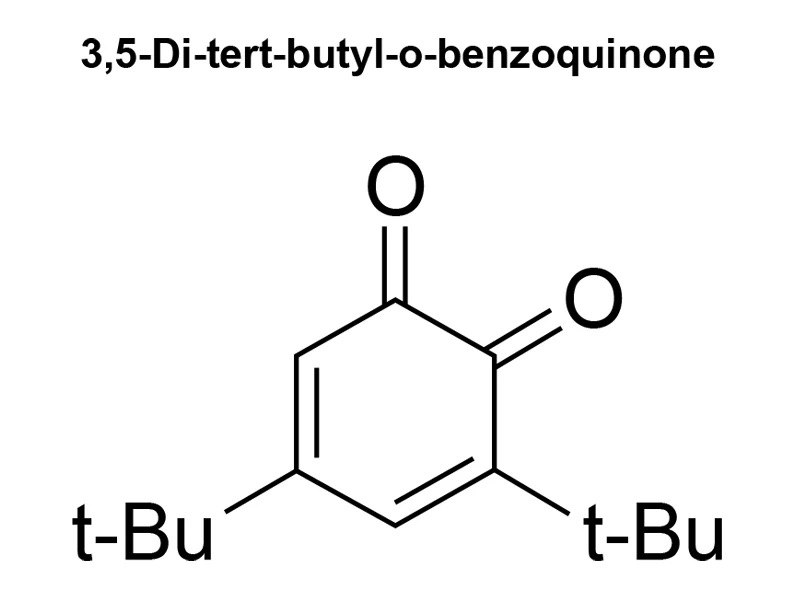
Dibutilbenzoquinona (CAS 3383-21-9) é uma ortoquinona estável e estericamente impedida. Este composto atua como um bloco de construção redox-ativo essencial em catálise, estabilização de polímeros e química de coordenação de metais devido à sua capacidade reversível de transferência de elétrons.
Detalhes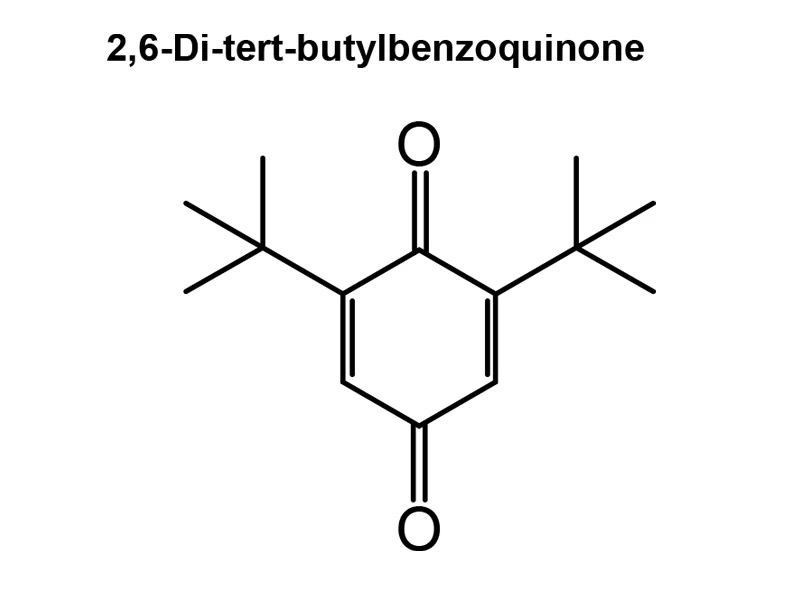
2,6-Di-terc-butilbenzoquinona (CAS 719-22-2) é um derivado de quinona estericamente impedido, onde os grupos terc-butil volumosos orto em relação às funções carbonila aumentam a estabilidade contra a dimerização e reações colaterais indesejadas. Ele serve como um agente oxidante versátil e intermediário-chave na síntese orgânica, particularmente em sistemas catalíticos e na preparação de quinonas ou ligantes funcionalizados.
Detalhes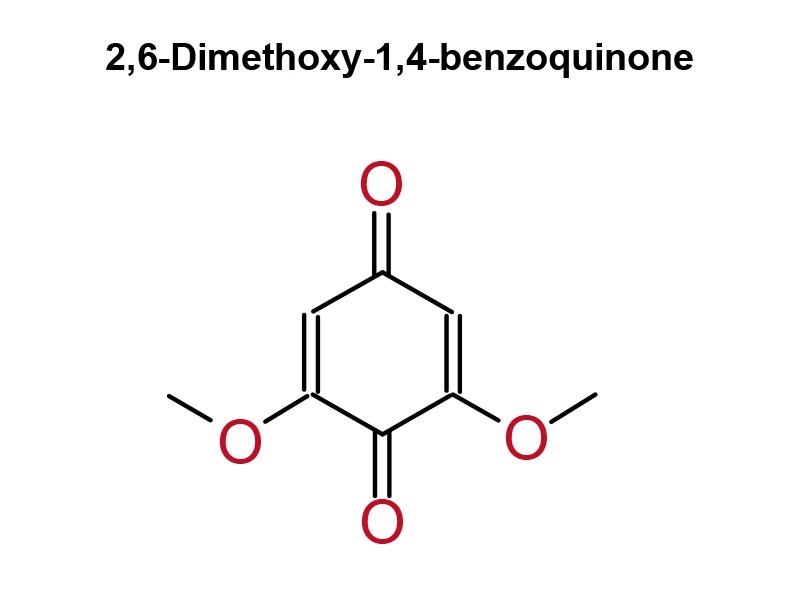
2,6-Dimetoxibenzoquinona (CAS 530-55-2) é um derivado de quinona metoxifuncionalizado de ocorrência natural, comumente encontrado em diversas plantas e espécies de fungos. Este composto serve como um bloco de construção versátil em síntese orgânica, particularmente para a construção de sistemas heterocíclicos complexos e estruturas aromáticas funcionalizadas, utilizando seu núcleo de quinona com deficiência de elétrons como um mecanismo reativo. Sua importância se estende a contextos biológicos, onde demonstra notáveis propriedades bioativas, incluindo atividades antimicrobianas, antioxidantes e potencialmente antitumorais, tornando-o um composto de interesse em química medicinal e pesquisa fitoquímica.
Detalhes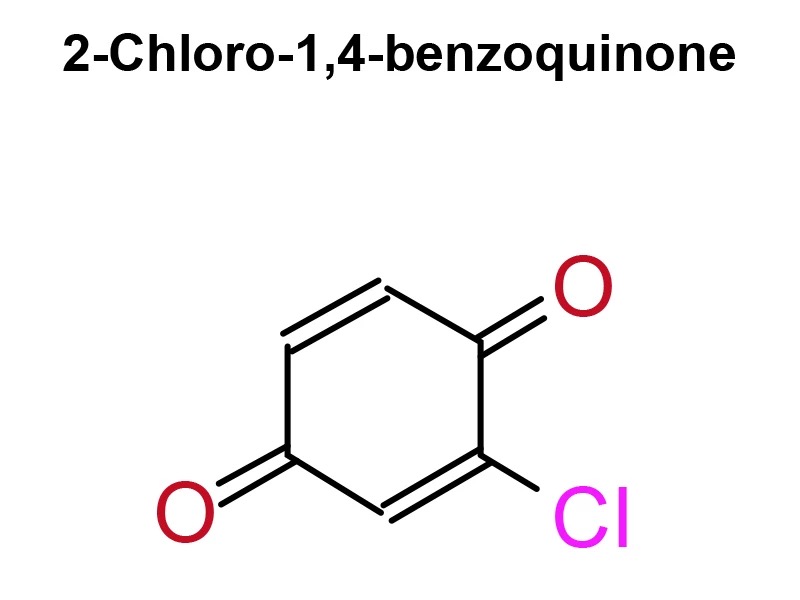
2-cloro-1,4-benzoquinona (CAS 695-99-8) é uma quinona clorada altamente reativa, amplamente utilizada como intermediário sintético essencial em química orgânica e pesquisa farmacêutica. Serve como um eletrófilo versátil para reações de substituição nucleofílica e é notavelmente empregada na síntese de agroquímicos e corantes especializados. Este composto requer manuseio cuidadoso devido à sua toxicidade e sensibilidade à luz e à umidade.
Detalhes
Orcinol CAS 504-15-4 é um composto orgânico natural classificado como um derivado de di-hidroxi toluenoÉ um composto fenólico constituído por um anel benzênico substituído com dois grupos hidroxila (-OH) nas posições meta (1 e 3) e um grupo metil (-CH₃) na posição 5. É um metabólito comum encontrado em diversos líquens e fungos, servindo como um bloco de construção versátil em síntese orgânica.
Detalhes
 CONTATE-NOS
 1st Floor, No. 477, Huancheng West Road, Nanqiao Town, Fengxian District, Shanghai,China
 sales@qxscientific.com
 +86 -13701740203


 IPv6 SUPORTADO POR REDE
|
Mapa do site
|
XML |
Blogue |
política de Privacidade
IPv6 SUPORTADO POR REDE
|
Mapa do site
|
XML |
Blogue |
política de Privacidade
Deixe um recado
Scan to Wechat/Whatsapp :



 Português
 English
 Español
 Português