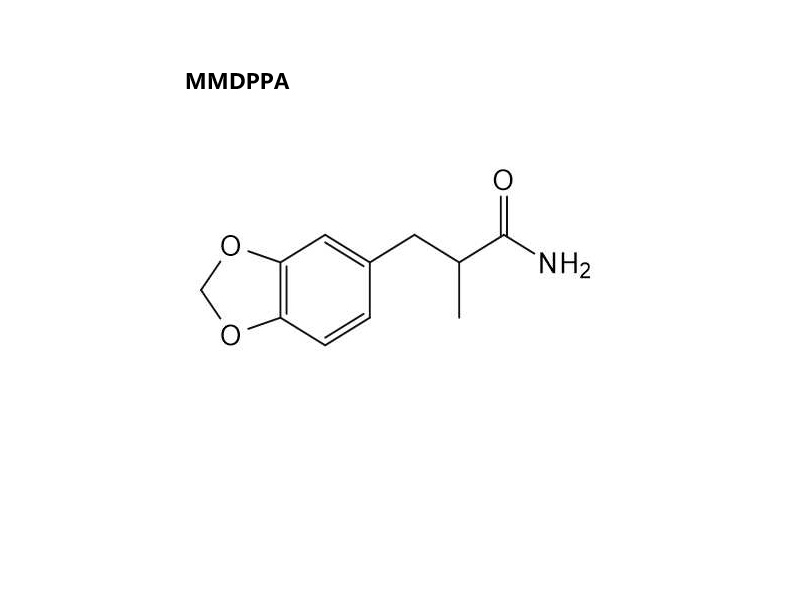
MMDPPA CAS 858215-05-1 is comprised of a 1,3-benzodioxole (methylenedioxyphenyl) moiety connected via a three-carbon chain to a primary amide (-CONH₂) group. The presence of a methyl substituent at the alpha-carbon (C-2) of the propanamide chain creates a chiral center, resulting in (R)- and (S)-enantiomers. The benzodioxole ring is a common pharmacophore known to influence metabolic stability and receptor binding.
Nome :
MMDPPANº CAS. :
858215-05-1MF :
C₁₁H₁₃NO₃MW :
207.23Pureza :
≥97%Aparência :
a white to off-white crystalline or powdery solidCondição de armazenamento :
Store in a cool, dry place.Chemical Properties
IUPAC Name: 3-(1,3-Benzodioxol-5-yl)-2-methylpropanamide
Synonyms: AG-205 (common research code); 2-Methyl-3-(3,4-methylenedioxyphenyl)propanamide; 3-(Benzo[d][1,3]dioxol-5-yl)-2-methylpropanamide
CAS Registry Number: 858215-05-1
Molecular Formula: C₁₁H₁₃NO₃
Molecular Weight: 207.23 g/mol
Appearance: Typically a white to off-white crystalline or powdery solid.
Melting Point: Data is limited. Estimated range: 120-140 °C (depending on purity and crystal form).
Solubility: Exhibits moderate lipophilicity. Expected to be:
Soluble in common organic solvents (DMSO, ethanol, methanol, acetone).
Sparingly soluble to slightly soluble in water due to the amide group.
Stability: Stable under standard laboratory conditions. The amide bond is generally stable, but the compound should be protected from prolonged exposure to strong acids/bases, light, and moisture. Store in a cool, dry place.
Biological Activities
This compound is best characterized as a research chemical or a pharmaceutical intermediate. Its primary biological interest is structural, related to its role as a precursor or analog in medicinal chemistry.
Primary Research Context: It is primarily reported in scientific and patent literature as a key intermediate in the synthesis of compounds targeting the endocannabinoid system, specifically for the development of cannabinoid receptor 1 (CB1) inverse agonists/antagonists.
Mechanism & Analogy: The structure incorporates elements (lipophilic aromatic system, amide linker) found in first-generation CB1 antagonists like Rimonabant. While the amide itself may not be a potent drug, it serves as a crucial building block for constructing more complex molecules designed to modulate appetite, metabolism, and energy balance.
Potential Activity: As a standalone molecule, specific pharmacological data (IC₅₀, Ki values) is scarce. Its activity would be expected to be significantly lower than that of the final drug candidates it helps to build. Any activity would likely be related to weak interaction with peripheral or central receptors of the endocannabinoid system.
Biosynthesis/Synthesis
This is a synthetic compound with no known natural biosynthetic pathway. A typical laboratory synthesis route involves:
1.Starting Material: 3,4-Methylenedioxyphenylacetone (piperonylacetone) or a similar benzodioxole-containing precursor.
2.Chain Elongation & Functionalization: The ketone is subjected to a reaction like the Henry reaction (nitroaldol) or homologation to introduce the additional carbon and a nitrile group.
3.Stereoselective Reduction/Modification: For enantiomerically pure material, an asymmetric reduction or resolution step may be employed to control the stereochemistry at the chiral 2-methyl center.
4.Amide Formation: The final step involves the hydrolysis of a nitrile intermediate or the direct amidation of the corresponding acid (3-(1,3-benzodioxol-5-yl)-2-methylpropanoic acid) to yield the target amide.
Applications


FAQs
Q1: What is the main purpose of this compound?
A: It is predominantly a synthetic intermediate used in academic and industrial research labs to create more complex drug candidates, particularly those related to cannabinoid receptor research.
Q2: Is it a controlled substance or banned?
A: As of now, 3-(1,3-benzodioxol-5-yl)-2-methylpropanamide itself is not specifically listed in major international drug control schedules (like the UN 1961/1971 Conventions or the US CSA). However, due to its structural relationship to regulated compounds, its sale and use may be monitored. It is sold for research purposes only and is not intended for human or veterinary use.
Q3: Where can I purchase it, and what purity is available?
A: It is available from specialized suppliers of fine chemicals and research compounds, such as Thermo Fisher Scientific etc. It is typically offered in milligram to gram quantities with purities ranging from 95% to 98%+ (by HPLC). Chiral versions (enantiomerically pure) may also be available at a higher cost.
Q4: What are the safety and handling precautions?
A: While a full toxicological profile may not be established, it should be treated as a potential health hazard.
Personal Protective Equipment (PPE): Always wear appropriate PPE: lab coat, safety glasses, and nitrile gloves.
Handling: Use in a well-ventilated area or chemical fume hood. Avoid creating dust or aerosols.
Storage: Store in a cool, dry, and well-ventilated place, away from incompatible materials. Keep the container tightly closed.
Always consult the Safety Data Sheet (SDS) provided by the supplier before handling.
Q5: Does it have any direct therapeutic or supplement use?
A: No. This compound is strictly a research chemical. It has not been approved as a drug or dietary supplement by any regulatory agency (FDA, EMA, etc.). Its use is confined to laboratory research.
Q6: What are its main spectroscopic identifiers for analysis?
A: Key identifiers include:
HPLC/LC-MS: Retention time and [M+H]⁺/m/z208.1.
¹H NMR: The distinctive singlet for the methylenedioxy protons (~5.95 ppm) and the amide proton signals.
IR Spectroscopy: Strong stretches for the amide carbonyl (C=O, ~1680 cm⁻¹) and N-H bonds.
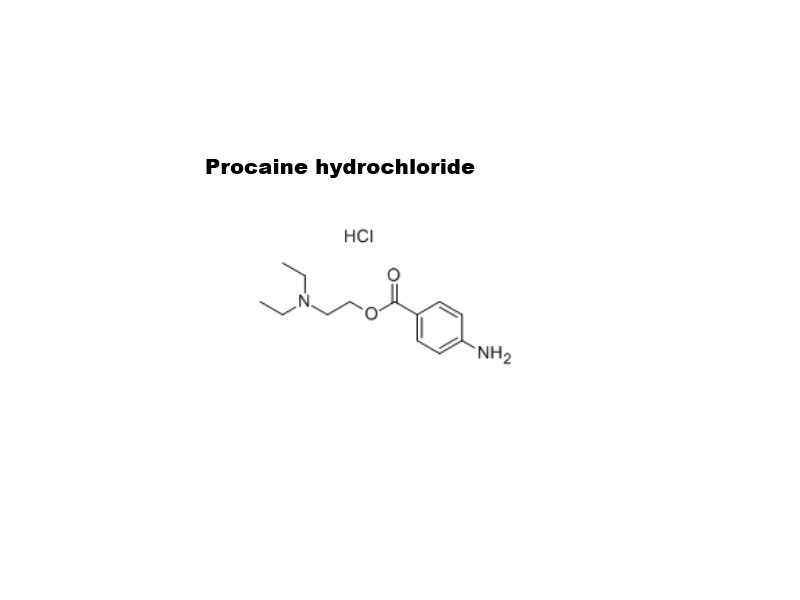
Cloridrato de Procaína CAS 51-05-8 é o sal cloridrato de procaína solúvel em água. É a formulação específica usada na medicina clínica, comercializada sob a famosa marca Procaína.NovocaínaEmbora seu uso na prática clínica tenha diminuído, continua sendo um medicamento historicamente fundamental e ainda é empregado em contextos médicos e terapêuticos específicos.
Detalhes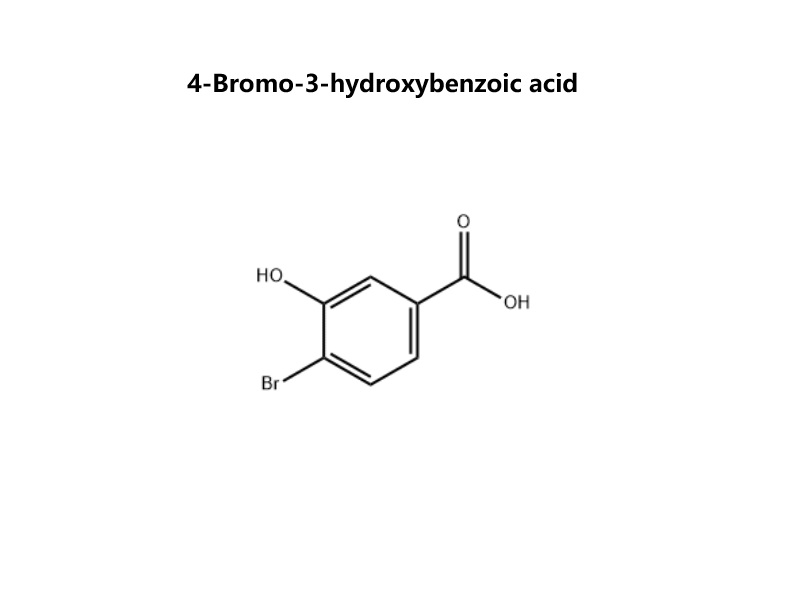
Ácido 4-bromo-3-hidroxibenzoico CAS 14348-38-0 é um Bloco de construção aromático multifuncional premium Projetada para síntese orientada à complexidade. Seu principal valor reside no posicionamento estratégico de três grupos funcionais distintos e ortogonalmente reativos em um anel benzênico, tornando-a uma ferramenta indispensável para a construção molecular convergente em pesquisa e desenvolvimento avançados.
Detalhes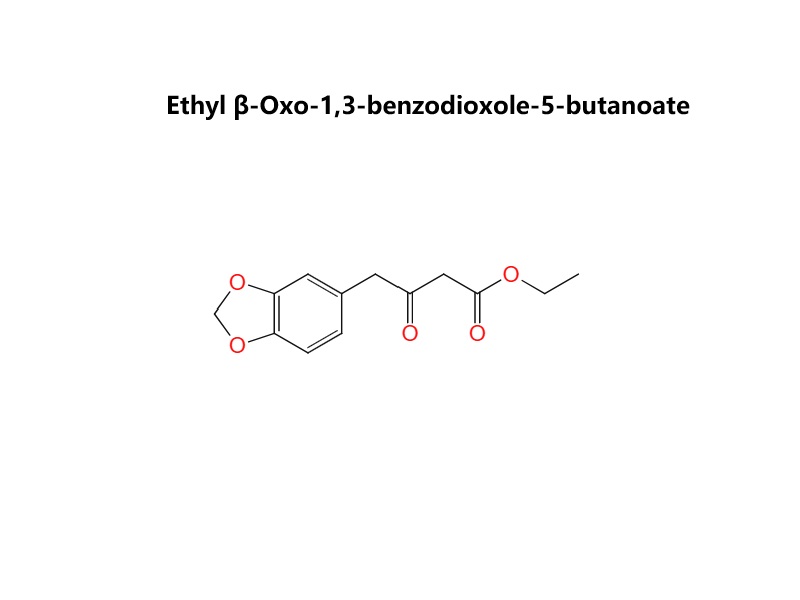
β-Oxo-1,3-benzodioxol-5-butanoato de etila CAS 31127-23-8 é um Derivado β-cetoéster apresentando um Sistema aromático 1,3-benzodioxol (metilenodioxifenil)Estruturalmente, consiste em um anel benzodioxol ligado por uma cadeia de três carbonos a um grupo funcional etil β-cetoéster (-CO-CH₂-COOEt). Isso o torna um bloco de construção bifuncional versátil Para síntese orgânica, combinando as propriedades eletrônicas do grupo benzodioxol com a alta reatividade de um β-cetoéster.
Detalhes![4-Nitrophenyl 3-(Benzo[d][1,3]dioxol-5-yl)-2-methylpropanoate](https://pt.qixiolivetol.com/storage/uploads/images/202604/17/1776427287_qZy87IjHSQ.jpg)
4-Nitrofenil 3-(Benzo[d][1,3]dioxol-5-il)-2-metilpropanoato é um agente acilante pré-ativado e quiralmente definido que combina um farmacóforo benzo[1,3]dioxol (piperonil) metabolicamente estável com a reatividade excepcional de um éster 4-nitrofenil. Permite a introdução eficiente e sem racemização de uma porção ácida quiral complexa em condições brandas, tornando-se indispensável para síntese química avançada e bioconjugação.4-Nitrofenil 3-(Benzo[d][1,3]dioxol-5-il)-2-metilpropanoato É um éster especial projetado como um intermediário bioquímico ou sintético reativo. Sua estrutura combina estrategicamente três unidades principais:(1)A Ácido 3-(benzo[1,3]dioxol-5-il)-2-metilpropanoico fração (ácido quiral substituído por piperonila).(2)A 4-nitrofenil éster saindo do grupo.Esse design o torna um éster ativado, onde o 4-nitrofenol é um excelente grupo de saída, facilitando reações de transferência de acila eficientes em condições brandas.
Detalhes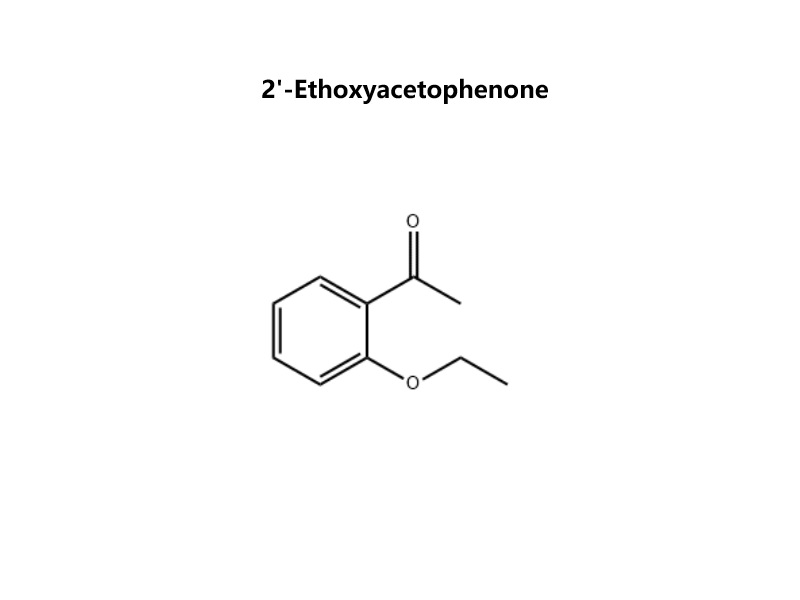
2'-Etoxiacetofenona CAS 2142-67-8 É uma cetona aromática especializada, caracterizada por um substituinte etóxi na posição orto em relação ao grupo acetil. Essa característica estrutural confere propriedades químicas e físicas distintas, tornando-a um bloco de construção privilegiado para a síntese de moléculas complexas, particularmente nos setores de aromas/fragrâncias e farmacêutico.
Detalhes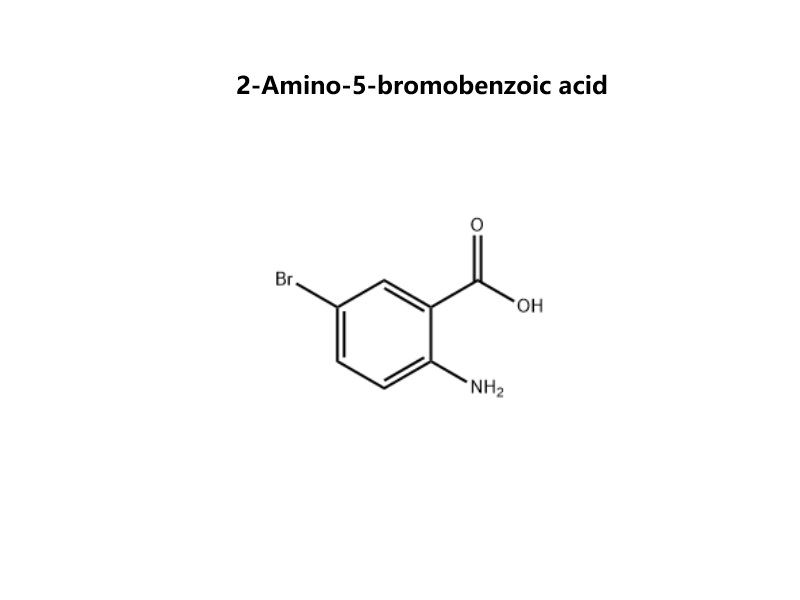
Ácido 2-amino-5-bromobenzoico CAS 5794-88-7 É um bloco de construção aromático altamente versátil que integra três grupos funcionais distintos — uma amina, um ácido carboxílico e um brometo de arila — em uma única estrutura sinteticamente valiosa. Essa multifuncionalidade o torna um intermediário crucial na química farmacêutica e de materiais avançados.
Detalhes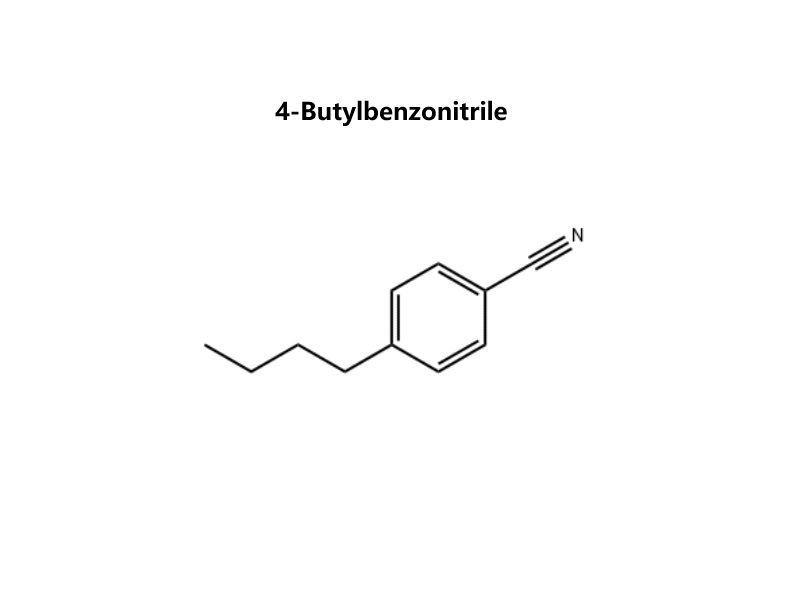
4-Butilbenzonitrila CAS 20651-73-4É um bloco de construção hidrofóbico estrategicamente projetado que combina um núcleo aromático rígido com uma cadeia alquílica linear flexível e um grupo funcional nitrila altamente versátil. Essa tríade de características o torna um intermediário excepcionalmente valioso para modular propriedades físico-químicas e viabilizar diversas vias sintéticas em pesquisas avançadas de materiais, produtos farmacêuticos e agroquímicos.
Detalhes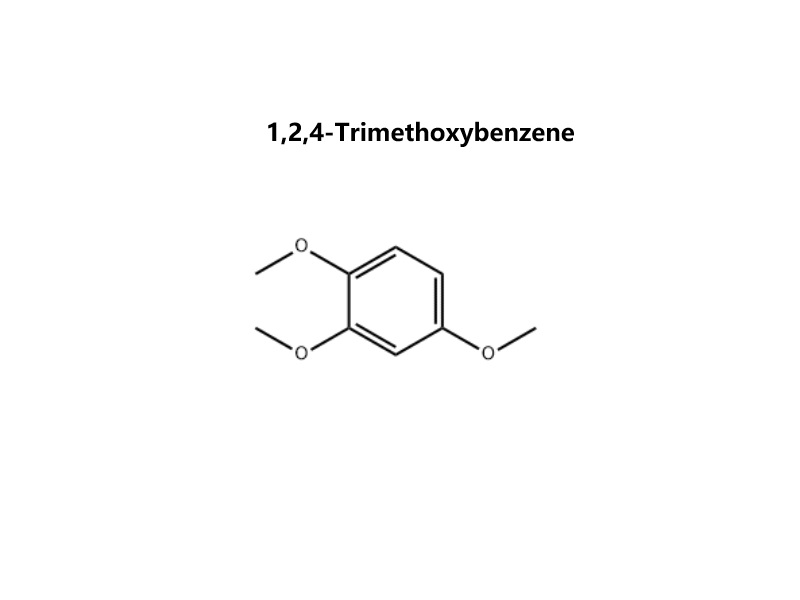
1,2,4-Trimetoxibenzeno CAS 135-77-3 É um bloco de construção aromático singularmente versátil e rico em elétrons. Seu principal valor reside em seu padrão de substituição assimétrico, porém altamente previsível, que proporciona um controle regioseletivo excepcional em síntese orgânica. Isso o torna uma estrutura privilegiada para a construção de moléculas complexas nas áreas farmacêutica, agroquímica e de materiais avançados.
Detalhes
 CONTATE-NOS
 1st Floor, No. 477, Huancheng West Road, Nanqiao Town, Fengxian District, Shanghai,China
 sales@qxscientific.com
 +86 -13701740203


 IPv6 SUPORTADO POR REDE
|
Mapa do site
|
XML |
Blogue |
política de Privacidade
IPv6 SUPORTADO POR REDE
|
Mapa do site
|
XML |
Blogue |
política de Privacidade
Deixe um recado
Scan to Wechat/Whatsapp :



 Português
 English
 Español
 Português